Tomorrow’s Doctors, Today’s Voters: Medical Students Champion Healthcare and Democracy
Updated: Apr 28, 2025
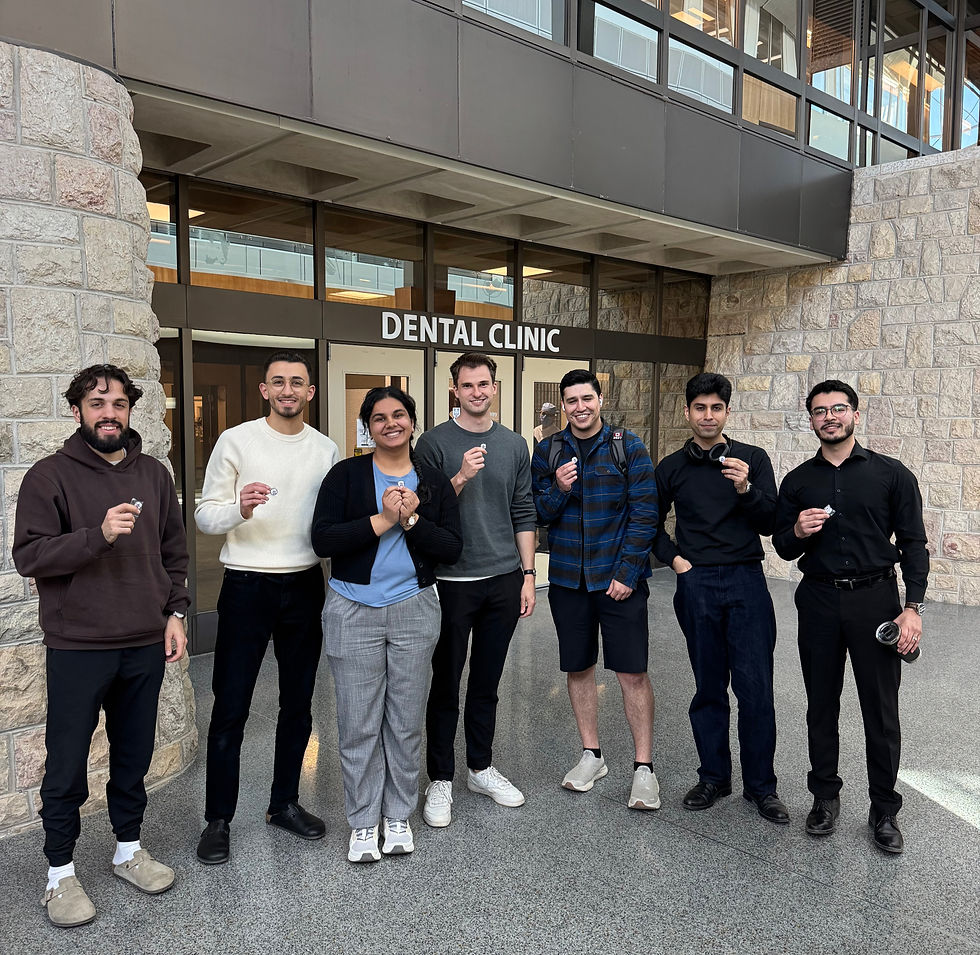
Tauqeer Iftikhar, Khalifa Ihmouda, Tarannum Khan, Teodora Marginean, Alan Michaud, and Rohan Singh
Representatives from McGill, uOttawa, USask and Western discuss the importance of the federal election and voter turnout from a medical student lens.

The Canadian federal election is set for April 28th, with millions of citizens casting their ballots to elect the next federal government. In an attempt to engage Canadian medical students to exercise their democratic right, a national campaign called “MedVotes 2025” was launched by a group of medical students from the University of Manitoba. The team includes founders Akhil Ramdoyal and Kyla Goulet-Kilgour, along with Fatima Saqib as a key campaign executive and Karan Bhasin as the pin designer. The campaign has provided extensive information regarding the election timeline, voting process, and potential improvements to our healthcare system, reaching over 9000 medical students. With representatives at 15 medical schools across Canada, the campaign culminated with the distribution of pins to anyone who pledged to vote.

In addition to this nationwide campaign, government affairs and advocacy committee (GAAC) representatives have been dedicated to advocacy and promoting voter turnout at their respective schools. The representatives from McGill (Teodora Marginean), uOttawa (Rohan Singh), USask (Tauqeer Iftikhar and Khalifa Ihmouda) and Western (Alan Michaud and Tarannum Khan) medical schools discuss the importance of voting, student challenges, and healthcare problems they want to see addressed in the near future.
Why does voting matter to you as a future physician?
McGill - Voting is an extension of our duty as future physicians to advocate for patients and public health advancement. Elected officials shape health policy and funding, affecting the hospitals, resources, and training that define our future practices. It’s also important to vote for leaders who prioritize evidence-based recommendations, scientific decisions, and the well-being of our communities. The pandemic really underscored how much leadership impacts health outcomes, and our preparedness for emergent issues.
uOttawa - Voting should matter to everyone, but especially as future physicians, it is an incredibly easy, accessible way we can provide care for our future patients. As medical students, we all understand the importance of social determinants of health and the role that public policy can play in determining healthcare outcomes. Through visiting electives and clinical experiences, we can witness the healthcare disparities throughout our country, and feel emboldened to make a change. While healthcare may be delivered provincially, the federal government still plays a vital role through policy decisions such as implementation of the Canadian Dental Care Plan, providing affordable oral healthcare to those who need it most. Additionally, the $10/day Childcare Plan makes early childcare a reality for all Canadian children, which we know is correlated with improved long-term health outcomes.
We also have a responsibility as future physicians working in the medical field to mend relationships with Indigenous peoples and restore trust and faith in the medical system. It is our federal system which funds First Nations and Inuit health services, and we should consider which political party is going to prioritize Indigenous healthcare and follow through on the Calls to Action published by the Truth and Reconciliation Commission.
USask - As future physicians, we see voting as an essential extension of our duty to advocate for patients and promote a healthier society. The decisions made by elected leaders regarding healthcare funding, delivery and policies directly impact the well-being of our future patients. By casting a ballot, we are helping choose the people who will shape the healthcare system we will work in and the community our patients will live in. In other words, voting is a way for us to stand up for our patients' needs, ensuring that their voices are heard in the policies that affect their lives. It’s one of the simplest yet most meaningful ways to influence change, ensuring that our values of compassion, equity, and evidence-based decision-making are represented in government.

Western - Voting matters to us as future physicians because it is one of the few established ways that we can improve the system we live and work in, while also maintaining any positive aspects that currently exist. It may be easy to forgo voting because life is already good for many of us , and even when it isn’t, it is easy to pass the buck and say the government is ineffective and untrustworthy. However, this mindset diminishes the importance and power of voting, resulting in stagnation of progress and potentially even undoing any progress that has been made over many years of hard work. We have seen this first-hand with the overturning of Roe v. Wade in the United States—a result of Supreme Court Justice appointments that were dictated by the nation’s choice in president. The very same can happen in Canada if we do not remain diligent and involved. Those looking to undo our great systems are hoping we become apathetic to the process. We must remain vigilant in the face of these challenges and remember how fortunate we are to live in a democratic nation.. Physicians are well equipped to be actively involved in politics, as we are educated in healthcare topics and systems—something that is frequently the center of political discourse. There is great potential for physicians to be involved and guide Canada in a positive direction if we establish early on this sentiment of civic duty in medical students and young professionals. When it is our time to help lead, we will be better equipped to do so.
What campus-level initiative have you taken as a GAAC at your school to boost voter turnout among medical students?
McGill - At McGill, we have been participating in the MedVotes Campaign put forward by the University of Manitoba and advertising through different communications channels to encourage voter pledging and turnout.
uOttawa - As a GAAC, we have encouraged our students to participate in voting by conducting a Register to Vote Raffle. As many students have moved for school, they may not be registered to vote in their new ridings. Additionally, by asking students to register online prior to election day, this helps people prioritize voting and provides education on where local polling stations are, and what items they need to bring with them to vote.
USask - We led a campus-wide effort to get our fellow medical students excited about voting. One of our steps was creating a concise “How to Vote” guide tailored specifically to USask medical students. This guide explained how to check your voter registration, what ID to bring, and key deadlines. Building on that foundation, we spearheaded USask’s participation in MedVotes 2025, a Canada-wide initiative to encourage medical students to head to the polls. We asked students to pledge to vote via an online form, and in return offered an incentive: a limited-edition “I Voted” pin designed by medical students. On Election Day, our team will set up a booth on both campuses where students who have voted (or committed to vote) can drop by, share that they’ve cast their ballot, and pick up their MedVotes pin.
Western - Given how busy medical students are, the main thing we have done as GAAC is continuously share reminders through various avenues and social platforms. We have found that something as simple as texting the class group chat significantly increases engagement. Motivating students to vote and pointing them to pre-existing resources or initiatives, such as MedVotes 2025 out of the University of Manitoba, has been a great way to keep our messaging from becoming repetitive yet still effective.

What’s the biggest barrier keeping medical students from voting in your school?
McGill - The two biggest barriers keeping medical students from voting at McGill are time and confusion over which riding to vote in. Election day might find us on a hospital shift or studying for exams, leaving little time or energy to vote. With so many other immediate pressures on our to-do list, casting a ballot can easily slip down our priority list. Although there is an opportunity to vote early through “Vote on Campus,” many people are unaware of the dates and hope to vote day of. Students may also be away from their home ridings on rotations, or be out-of-province and unsure how to vote.
uOttawa - While barriers may change between individuals, the most common barrier for medical students is transportation to local polling stations. Ottawa pre-clerkship students are very lucky this year to have our federal polling station close by to our campus, but we did not have this privilege during our provincial election which led to lower engagement. Encouraging students to carpool to vote, or providing instructions on the most convenient public transit routes to polling stations has been an effective way to address this barrier.

USask - One of the biggest barriers we have observed among our classmates is the sheer logistical challenge of voting amidst a medical student’s hectic and often unpredictable schedule. Many students are not even in their home constituency on Election Day, whether we’re in Saskatoon, Regina, or out of province for electives, which complicates the simple act of casting a ballot.. If students are unaware of options like mail-in ballots, early voting, or campus polling stations, they may miss their chance to vote by not being in the right place at the right time.
Western - It's hard to pinpoint a single reason why medical students don’t vote, but drawing from the recent Ontario provincial election, it was a mix of confusion on how to vote as well as feeling like “one vote does not matter”. Fortunately, campuses have set up special polling stations for the federal election, which has definitely allowed more of our classmates to make it to the polls! With the current political climate, it may be easy to feel like a single vote won’t change anything, but the opposite point—that every vote counts—can also be made by simply pointing to our neighbours down south. We’re hoping that the discourse around the election, along with the convenience of being able to access the polls, will encourage people to show up. Ideally, students can take a moment to make an informed choice about who they are voting for, and that’s why we believe communicating regularly and encouraging our classmates to have discussions will contribute to getting more medical students to the polls.
Which single gap in Canada’s health system do you most hope this election will finally address, and why?
McGill - I hope this election finally tackles the lack of universal pharmacare and dental care in Canada. We have all seen patients struggle to afford their medications or dental procedures, which are preventive and necessary. It is disheartening to prescribe the right drug knowing cost could keep it out of a patient’s reach. This gap betrays the principle of universal care. A national pharmacare and dental program would strengthen healthcare for everyone.

uOttawa - I hope that this election will address the severe lack of primary care physicians, and their reduced capacity to treat patients. We know that an estimated 6.5 million Canadians don’t have access to a family doctor, leaving many with unmanaged conditions, and delays in receiving care when needed. Changing funding models for family physicians to compensate them for much of their unpaid labour, or funding allied healthcare professionals to work in multidisciplinary clinics could take much of the burden off of physicians allowing them to devote more of their time to patients. While there are multiple proposed solutions to this problem, I hope that the winning party honours and protects Canadian principles of public healthcare.
USask - The gap we most hope to see addressed is Canada’s crumbling long-term-care (LTC) system: too few modern beds, chronic staffing shortages, and months-long wait lists that trap frail seniors in hospital hallways, clogging every downstream service from surgery to emergency care. A rapidly doubling 75-plus population means this choke-point will soon overwhelm primary-care and pharmacare gains unless we act now. A national LTC framework backed by a decade-long capital build, enforceable staffing ratios, and incentives to recruit and retain personal support workers would restore dignity to residents and relieve the pressure cascading through the entire health system.
Western - We think the most pressing gap in Canada’s health care system is access to care. This is something that must be urgently addressed, as many Canadians do not currently have reliable access to family physicians, life-altering surgical procedures, and emergency services. If we cannot supply the population with these foundational levels of care, other shortcomings are moot. Healthcare discussion and reform must remain at the forefront of public discourse until tangible improvements are made. According to the Canadian Charter of Rights and Freedoms, Canadians have the right to life, liberty, and security. It can be argued that life without health in all its definitions and perspectives— is impotent. As a nation we must feel entitled to, and advocate for, the provision of healthcare that is equitably accessible to all of us and in a manner that is sufficient for our nation’s needs.


🔥
What a powerful and inspiring article! It's incredible to see medical students across Canada stepping up to champion both healthcare and democracy; true leadership in action!